AI and the Nigerian Startup Ecosystem
-A Transformative Force in 2026
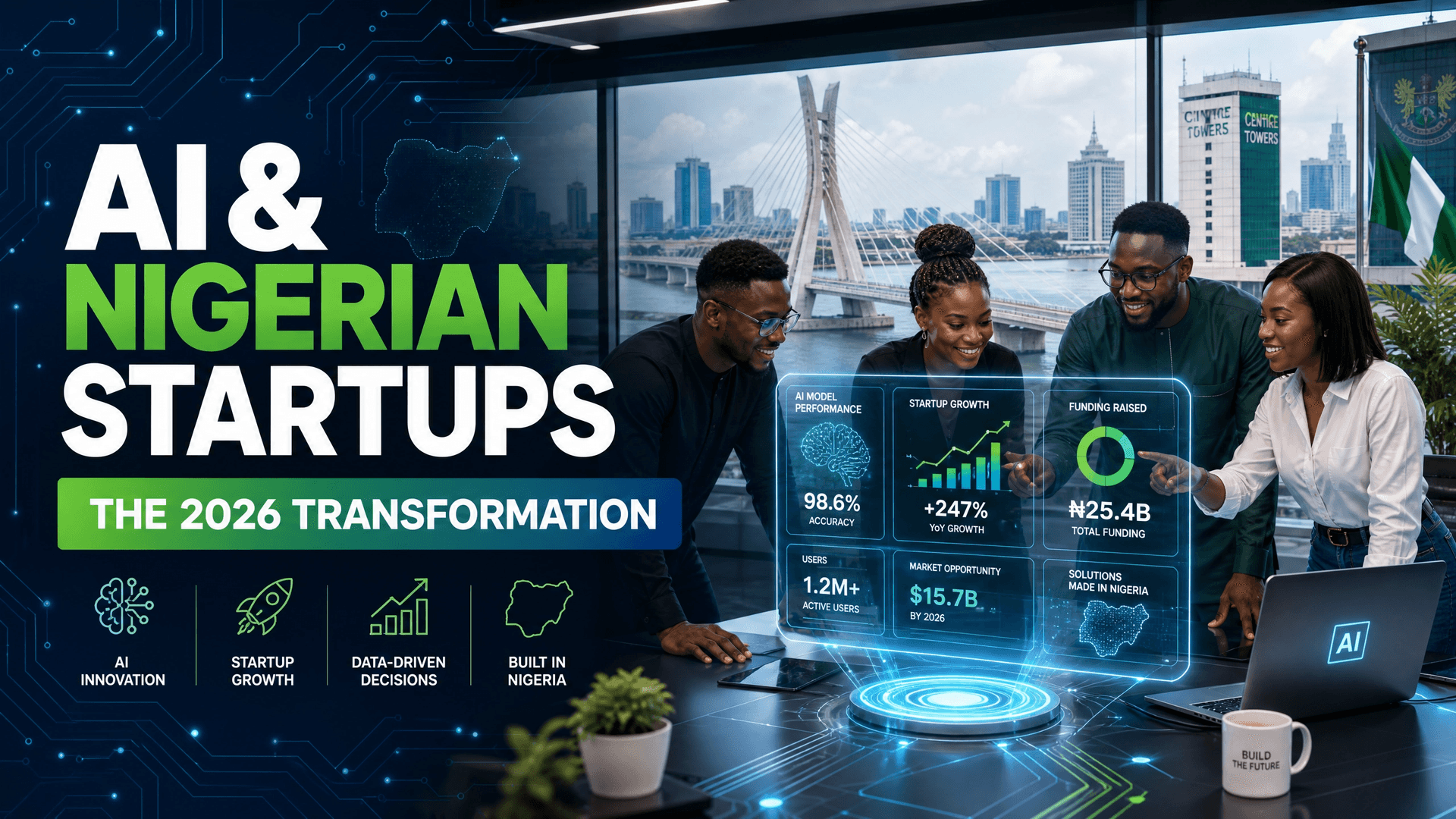
Nigeria's startup scene is a hotbed of innovation, constantly pushing boundaries and attracting significant investment. In 2026, Artificial Intelligence (AI) has emerged as a pivotal technology, fundamentally reshaping how Nigerian startups operate, innovate, and compete on both local and global stages. This article delves into the multifaceted impact of AI on the Nigerian startup ecosystem, exploring the opportunities it unlocks and the challenges that must be navigated for sustained growth.
The Ascendance of AI in Nigerian Startups
The adoption of AI within Nigerian startups is no longer a futuristic concept but a present reality. With over 120 active AI startups across various sectors, Lagos, in particular, is leading this charge. These startups are leveraging AI to enhance productivity, improve operational efficiency, and gain a competitive edge. From fintech solutions that streamline financial services to healthcare and robotics, AI is proving to be a game-changer.
Opportunities for Nigerian AI Startups
1. Enhanced Innovation and Product Development
AI provides startups with powerful tools to innovate at an unprecedented pace. Machine learning algorithms can analyze vast datasets to identify market gaps, predict consumer behavior, and personalize user experiences. This capability allows Nigerian startups to develop more sophisticated and tailored products and services, addressing unique local challenges with cutting-edge solutions.
2. Operational Efficiency and Cost Reduction
For startups, optimizing resources is crucial. AI-powered automation can significantly reduce operational costs by automating repetitive tasks, improving supply chain management, and enhancing customer service through chatbots and virtual assistants. This efficiency allows startups to allocate human capital to more strategic initiatives, fostering growth without ballooning expenses.
3. Attracting Investment and Global Recognition
Nigerian AI startups are increasingly attracting significant investment. In 2025, Nigerian AI and technology companies secured $742 million, representing 44% of the total technology sector investment. This influx of capital underscores investor confidence in the potential of AI-driven ventures in Nigeria, propelling these startups onto the global stage and fostering international partnerships.
4. Solving Local Challenges with AI
AI offers unique solutions to pressing Nigerian challenges. Startups are using AI to improve access to healthcare (e.g., Intron Health), enhance agricultural productivity (e.g., Farmcrowdy), and advance robotics (e.g., Awarri Tech). These localized AI applications demonstrate the technology's potential to drive socio-economic development.
Challenges and the Path Forward
1. Data Quality and Readiness
One of the primary challenges for Nigerian startups adopting AI is the availability and quality of data. AI models are only as good as the data they are trained on. Ensuring clean, relevant, and sufficient datasets remains a significant hurdle, requiring robust data collection and management strategies.
2. Skills Gap and Talent Acquisition
The demand for AI expertise far outstrips the current supply in Nigeria. Startups often struggle to find and retain skilled AI engineers, data scientists, and machine learning specialists. Bridging this skills gap through specialized training programs, collaborations with academia, and incentives for AI professionals is critical.
3. High Implementation and Operational Costs
While AI promises long-term cost savings, the initial investment in AI infrastructure, tools, and talent can be substantial. For nascent startups, these upfront costs can be prohibitive. Finding cost-effective AI solutions and leveraging open-source technologies can help mitigate this challenge.
4. Ethical and Regulatory Landscape
As AI proliferates, ethical considerations around data privacy, algorithmic bias, and accountability become paramount. The evolving regulatory landscape, as seen with 44 African countries adopting data protection laws by 2026, requires startups to be vigilant in ensuring their AI solutions are compliant and ethically sound.
A Future Forged by AI
AI is undeniably a transformative force for Nigerian startups in 2026. While challenges related to data, skills, costs, and regulation persist, the opportunities for innovation, efficiency, and global impact are immense. Startups that strategically embrace AI, invest in talent development, and navigate the ethical landscape will be at the forefront of Nigeria's digital revolution, driving economic growth and solving critical societal problems. The journey ahead requires adaptability, foresight, and a commitment to harnessing AI's full potential for a prosperous future.
Stay sharp on Nigeria
Get the best stories on money, tech, and culture delivered weekly. No spam, unsubscribe anytime.
The Writer
ola dipps contributes deep insights into the evolution of Nigeria's digital and cultural landscape.